
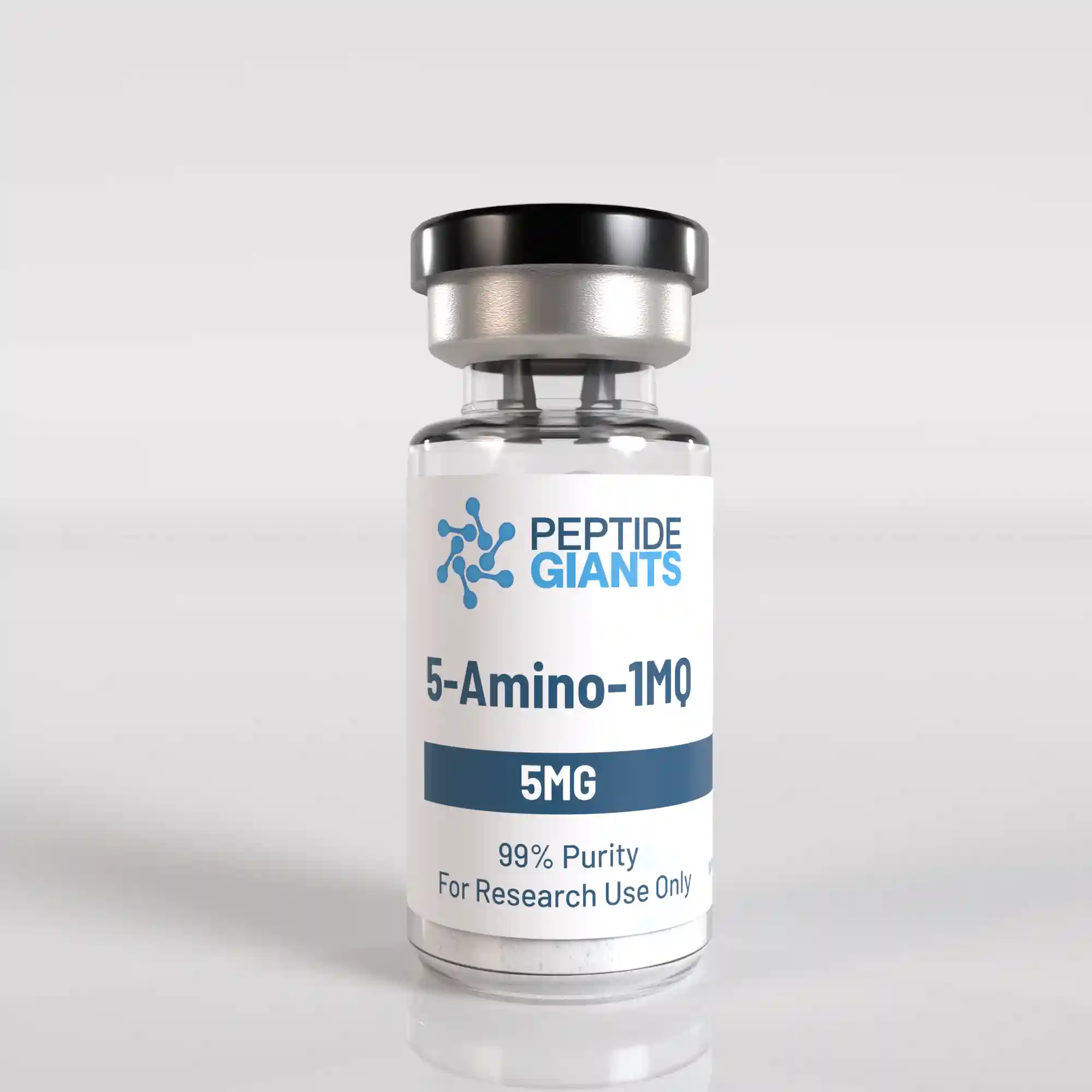
5-Amino-1MQ – Lyophilized Research Vial
5-Amino-1mq is for research use only.
Each batch includes a certificate of analysis from an independent third-party lab
Test results for this batch
Product details
Frequently asked questions
Store lyophilized vials at -20°C for maximum shelf life up to 24 months. Reconstituted solutions should be refrigerated at 2°C to 8°C and used within 30 days.
Every vial is printed with a batch lot number. You can check the HPLC purity certificate for that lot in the Test Results section above.
Orders placed before 6:00 PM ET, Monday to Friday, ship the same day from our Florida warehouse with full USPS / FedEx tracking.
Best sellers
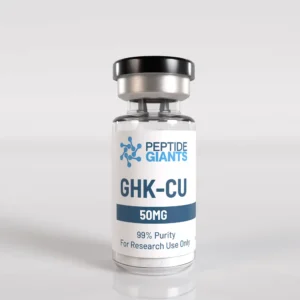
About 5-Amino-1MQ – Lyophilized Research Vial
5-Amino-1MQ (5-amino-1-methylquinolinium, also written 5A1MQ) is a small-molecule inhibitor of nicotinamide N-methyltransferase (NNMT), the enzyme that moves a methyl group from S-adenosylmethionine (SAM) onto nicotinamide. It is a membrane-permeable methylquinolinium compound, not a peptide, and it is used in laboratory studies of NAD+ salvage, methyl-donor balance and adipocyte metabolism.
You can browse every batch report on our lab reports page. Free shipping applies on 5 or more vials or orders over $200.
Specifications
| Compound name | 5-Amino-1-methylquinolinium (5-amino-1MQ, 5A1MQ) |
|---|---|
| Compound class | Small-molecule NNMT inhibitor (methylquinolinium scaffold). Not a peptide. |
| Molecular target | Nicotinamide N-methyltransferase (NNMT) |
| Cation formula and mass | C10H11N2+, about 159.2 g/mol. Our lab report names the compound as 5-Amino-1MQ and does not state a salt form. |
| Reference salt form | Reference suppliers catalogue the iodide salt: C10H11N2·I, 286.11 g/mol [7]. Contact us if you need the salt form for molar calculations. |
| CAS number | 42464-96-0, listed for the iodide salt by reference suppliers [7] |
| Vial sizes | 5 mg and 50 mg, lyophilized powder in a single sealed vial |
| Published batch | PG-5030 (50 mg): 99.66% ± 0.18% purity by HPLC-UV/VIS |
| Measured content | 62.62 mg against 50 mg labeled (HPLC-UV/VIS) |
| Testing laboratory | Vanguard Laboratory (Olympia, WA), independent third party. The report refers to A2LA Certificate #6377.01.01. |
| Reference solubility | Clear solution in DMSO at 2 mg/mL for the iodide salt, as listed by a reference supplier [7]. Confirm for your own system. |
| Storage | -20°C, protected from light |
| Intended use | Laboratory research only |
Product details
Overview
NNMT transfers a methyl group from SAM to nicotinamide, producing 1-methylnicotinamide (1-MNA) and S-adenosylhomocysteine. Because nicotinamide is also the starting material for NAD+ salvage, NNMT activity sits at the junction of NAD+ metabolism and cellular methyl-group supply. 5-Amino-1MQ is a research tool for blocking that single step, which lets researchers ask what changes when NNMT is switched off.
Mechanism of interest
In the published characterization of this compound class, methylquinolinium analogues with a primary amine substitution crossed cell membranes readily in parallel artificial membrane permeability and Caco-2 assays, and inhibited NNMT without inhibiting related SAM-dependent methyltransferases or enzymes of the NAD+ salvage pathway [1]. An NNMT IC50 of about 1.2 µM is reported for 5-Amino-1MQ, taken from the same group's structure-activity study [1,2]. In differentiated 3T3-L1 adipocytes, NNMT inhibition lowered intracellular 1-MNA, raised intracellular NAD+ and SAM, and suppressed lipogenesis [1].
Published research context
These are the studies we draw on. Each was done in cells or mice, and none was done in people. Dose information is left out on purpose.
| Study | Model | What was reported |
|---|---|---|
| Neelakantan et al., J Med Chem, 2017 [2] | Enzyme assays and docking | Structure-activity relationships for small-molecule NNMT inhibitors, with a more than 1000-fold range of activity. Docking scores correlated with measured IC50 values. |
| Neelakantan et al., Biochem Pharmacol, 2018 [1] | 3T3-L1 adipocytes; diet-induced obese mice (11-day study) | In adipocytes, lower 1-MNA, higher NAD+ and SAM, and suppressed lipogenesis. In mice, 5-Amino-1MQ-treated animals lost weight while controls gained slightly, had about 35% lower epididymal white adipose mass, smaller adipocytes and lower plasma total cholesterol. Cumulative food intake did not differ. |
| Neelakantan et al., Biochem Pharmacol, 2019 [3] | Aged mice with muscle injury; C2C12 myoblasts | An NNMT inhibitor increased muscle stem cell proliferation and fusion in injured aged muscle, with nearly 2-fold greater myofiber cross-sectional area, and promoted myoblast differentiation in vitro. |
| Sampson et al., Sci Rep, 2021 [4] | Diet-induced obese mice | An NNMT inhibitor combined with a switch to a lean diet gave faster body-weight and fat loss and lower liver adiposity than the diet switch alone, with a distinct metabolite signature in adipose tissue. |
| Babula et al., Diabetes Obes Metab, 2024 [5] | Diet-induced obese mice (28 days); pharmacokinetics | 5A1MQ dose-dependently limited body-weight and fat-mass gain, improved oral glucose tolerance and insulin sensitivity, suppressed hyperinsulinaemia and attenuated hepatic steatosis. Alanine transaminase, aspartate transaminase and ketone bodies were normalized. Plasma and tissue exposure was measured after intravenous, oral and subcutaneous dosing, with distribution to adipose, muscle and liver. |
| Kannt et al., Sci Rep, 2018 [6] | High-fat-diet mice; a different compound (JBSNF-000088) | An independent group's NNMT inhibitor, not 5-Amino-1MQ, reduced body weight and improved insulin sensitivity and glucose tolerance in diet-induced obese mice. |
References
- Neelakantan H, Vance V, Wetzel MD, Wang HL, McHardy SF, Finnerty CC, Hommel JD, Watowich SJ. Selective and membrane-permeable small molecule inhibitors of nicotinamide N-methyltransferase reverse high fat diet-induced obesity in mice. Biochem Pharmacol. 2018;147:141-152. PubMed | DOI
- Neelakantan H, Wang HY, Vance V, Hommel JD, McHardy SF, Watowich SJ. Structure-activity relationship for small molecule inhibitors of nicotinamide N-methyltransferase. J Med Chem. 2017;60(12):5015-5028. PubMed | DOI
- Neelakantan H, Brightwell CR, Graber TG, Maroto R, Wang HL, McHardy SF, Papaconstantinou J, Fry CS, Watowich SJ. Small molecule nicotinamide N-methyltransferase inhibitor activates senescent muscle stem cells and improves regenerative capacity of aged skeletal muscle. Biochem Pharmacol. 2019;163:481-492. PubMed | DOI
- Sampson CM, Dimet AL, Neelakantan H, Ogunseye KO, Stevenson HL, Hommel JD, Watowich SJ. Combined nicotinamide N-methyltransferase inhibition and reduced-calorie diet normalizes body composition and enhances metabolic benefits in obese mice. Sci Rep. 2021;11:5637. PubMed | DOI
- Babula JJ, Bui D, Stevenson HL, Watowich SJ, Neelakantan H. Nicotinamide N-methyltransferase inhibition mitigates obesity-related metabolic dysfunction. Diabetes Obes Metab. 2024;26(11):5272-5282. PubMed | DOI
- Kannt A, Rajagopal S, Kadnur SV, et al. A small molecule inhibitor of nicotinamide N-methyltransferase for the treatment of metabolic disorders. Sci Rep. 2018;8:3660. PubMed | DOI
- MilliporeSigma. 5-Amino-1-methylquinolinium iodide, product SML2832 (supplier data for formula, molecular weight, CAS number, solubility and appearance of the iodide salt).
Purity and quality testing
Every batch is tested by an independent third-party laboratory. The published report for this product is batch PG-5030 (50 mg vial), tested on 23 June 2026 by Vanguard Laboratory, with a purity of 99.66% ± 0.18% by HPLC-UV/VIS and a measured content of 62.62 mg against the 50 mg label.
The report carries the ISO/IEC 17025:2017 accredited-laboratory mark and refers to A2LA Certificate #6377.01.01 for the list of accredited tests. The chromatogram header reads "DAD1 A, Sig=214,4" (diode-array detector, signal at 214 nm) and shows three integrated peaks: the main peak at about 2.15 minutes (area 11,082) and two minor peaks at about 5.19 and 9.00 minutes (areas of roughly 18 and 19). The main peak is 99.66% of the total integrated area, which is the purity figure the report states. The report also notes that its results relate only to the portion of sample tested. A report specific to the 5 mg vial has not been published yet.
How to read the lab report
- Check the batch number and test date, and match the batch number to the one on your vial label.
- On the HPLC chromatogram, the main peak should dominate. Purity is that peak's share of the total detected area, and the ± figure is the lab's stated uncertainty on the result.
- Check the compound name and lot number printed on the report.
- Compare the measured content with the labeled amount. This lot measured 62.62 mg against 50 mg labeled. The report covers purity and quantity by HPLC-UV/VIS only. It does not report identity by mass spectrometry, heavy metals or microbiological testing.
- Read the footer. It names the accreditation certificate the lab refers to and states what the results apply to.
Form, preparation and storage
How 5-Amino-1MQ compares with other NAD+-pathway research compounds
Researchers studying NAD+ metabolism often choose between acting on an enzyme, supplying the cofactor, or looking at upstream signaling. These compounds are used for different questions.
| Compound | Type | Role in NAD+ pathway research |
|---|---|---|
| 5-Amino-1MQ | Small-molecule inhibitor | Blocks NNMT, the enzyme that uses up nicotinamide and SAM |
| NAD+ | Coenzyme (dinucleotide) | The cofactor itself, supplied directly or measured as the endpoint |
| MOTS-c | Mitochondrial-derived peptide | Studied for effects on cellular metabolic regulation |
Why researchers order from Peptide Giants
Reliable work depends on knowing what is in the vial. A rounded "99%+" tells you little. We publish the batch result and the measured content instead.
Frequently Asked Questions About 5-Amino-1MQ
What is 5-Amino-1MQ?
5-Amino-1MQ (5-amino-1-methylquinolinium) is a small-molecule inhibitor of nicotinamide N-methyltransferase (NNMT). It is used in laboratory research on NAD+ salvage, methyl-donor balance and adipocyte metabolism.
Is 5-Amino-1MQ a peptide?
No. It is a small organic molecule with a methylquinolinium structure. We list it alongside our research peptides because it is sold to the same research customers as a lyophilized research compound.
What are the molecular formula, molecular weight and CAS number of 5-Amino-1MQ?
The 5-amino-1-methylquinolinium cation is C10H11N2+, about 159.2 g/mol. Reference suppliers catalogue the iodide salt as C10H11N2·I, 286.11 g/mol, CAS 42464-96-0. Our lab report names the compound as 5-Amino-1MQ and does not state a salt form, so contact us if you need the salt form for molar calculations.
What is NNMT?
NNMT (nicotinamide N-methyltransferase) is an enzyme that transfers a methyl group from SAM to nicotinamide, producing 1-methylnicotinamide. Its activity links NAD+ salvage to the cell's supply of methyl groups.
How is 5-Amino-1MQ different from NAD+, NMN or NR?
NAD+ is the cofactor itself, and precursors such as NMN and NR are studied as ways of supplying it. 5-Amino-1MQ works at a different step. It inhibits NNMT, the enzyme that methylates nicotinamide, which is also the starting material for NAD+ salvage. Researchers use it to ask what changes when that step is blocked.
What do published studies measure when they use an NNMT inhibitor?
Cell studies measure intracellular 1-MNA, NAD+ and SAM and lipogenesis in 3T3-L1 adipocytes, and myoblast differentiation in C2C12 cells. Mouse studies report body weight and fat mass, adipocyte size, plasma cholesterol, glucose tolerance and insulin sensitivity, liver histology and liver enzymes, muscle stem cell activity and myofiber area, and plasma and tissue pharmacokinetics. See the references above.
Has 5-Amino-1MQ been studied in people?
We are not aware of any published human clinical trials of 5-Amino-1MQ. The published studies cited on this page were done in cells and mice, and findings from those models do not establish effects in people. This page makes no claims about use, safety or effects in people.
Is 5-Amino-1MQ FDA-approved?
No. It is not approved by the FDA for any use. Peptide Giants sells it only as a laboratory research chemical, not as a drug, dietary supplement or food.
What purity is it?
The published batch, PG-5030 (50 mg), tested at 99.66% ± 0.18% by HPLC at Vanguard Laboratory on 23 June 2026.
Does the lab report cover the 5 mg vial?
Not yet. Each batch has its own report, and the one published for this product is for batch PG-5030 in the 50 mg size. A report specific to the 5 mg vial has not been published yet. Match the batch number on your vial to our lab reports page, or contact us for the report that matches your vial.
Do you provide a certificate of analysis?
Yes. The batch lab report (COA) is published on our lab reports page.
Why does the measured content differ from the label?
The lab measures the amount of compound in the vial by HPLC-UV/VIS, and the result applies to that lot only. For lot PG-5030 it measured 62.62 mg against 50 mg labeled. For exact concentrations, work from the measured value on the report and confirm it in your own system.
What does the certificate of analysis cover?
Each report covers one lot and shows chromatographic purity and measured quantity by HPLC-UV/VIS. It does not report identity by mass spectrometry, heavy metals or microbiological testing.
Is the testing laboratory accredited?
The report carries the ISO/IEC 17025:2017 accredited-laboratory mark and refers to A2LA Certificate #6377.01.01 for the list of accredited tests. Check that certificate's scope for the specific analysis you care about.
Why does quality vary between 5-Amino-1MQ suppliers, and how do I check?
It is sold as a research chemical, so purity and content are not set by a regulator and can differ between vendors and between lots. That makes the batch report the thing to check. Match the lot number to your vial, look for one dominant peak on the chromatogram, read the measured content and not just the purity percentage, and confirm who ran the test and under what accreditation. Our lab reports page lists every batch we publish.
Does it need to be dissolved before use?
Yes. It is supplied as a lyophilized powder. Researchers usually dissolve it in sterile water or a solvent such as DMSO, depending on the assay. Confirm solubility and concentration for your own system.
Content last reviewed 27 November 2026.
Research background
Extensively researched across peer-reviewed literature for cellular mechanisms, binding affinity, and biochemical pathways in laboratory models.
Quality and analytical standard
Each batch is tested by Vanguard Lab, a third-party analytical lab. Check the lot number on your vial against the test results and COA on this page.
Customer reviews
Third time ordering. Lyophilized powder reconstitutes crystal clear with zero residue. Fast domestic shipping with tracking provided right away. You can trust Peptide Giants.
Dispatched the same afternoon from Tampa and arrived on my doorstep two days later. The insulated protective packaging ensured vials were completely intact.
Reached out on WhatsApp before buying to confirm batch expiry dates. Got a friendly response within 10 minutes. Research results have been spot-on.
No customs delays since it ships straight out of Florida. Clean cakes, sterile crimps, and rapid delivery every single time.