Product Usage Notice: THIS PRODUCT IS INTENDED AS A RESEARCH CHEMICAL ONLY.
It is designated for in vitro testing and experimental purposes. Any use involving human or animal consumption is prohibited by law. All information provided on this website is for educational purposes only. This product must only be handled by licensed, qualified professionals. It is not intended for use as a drug, food, or cosmetic, and must not be misused, mislabeled, or misrepresented as such.
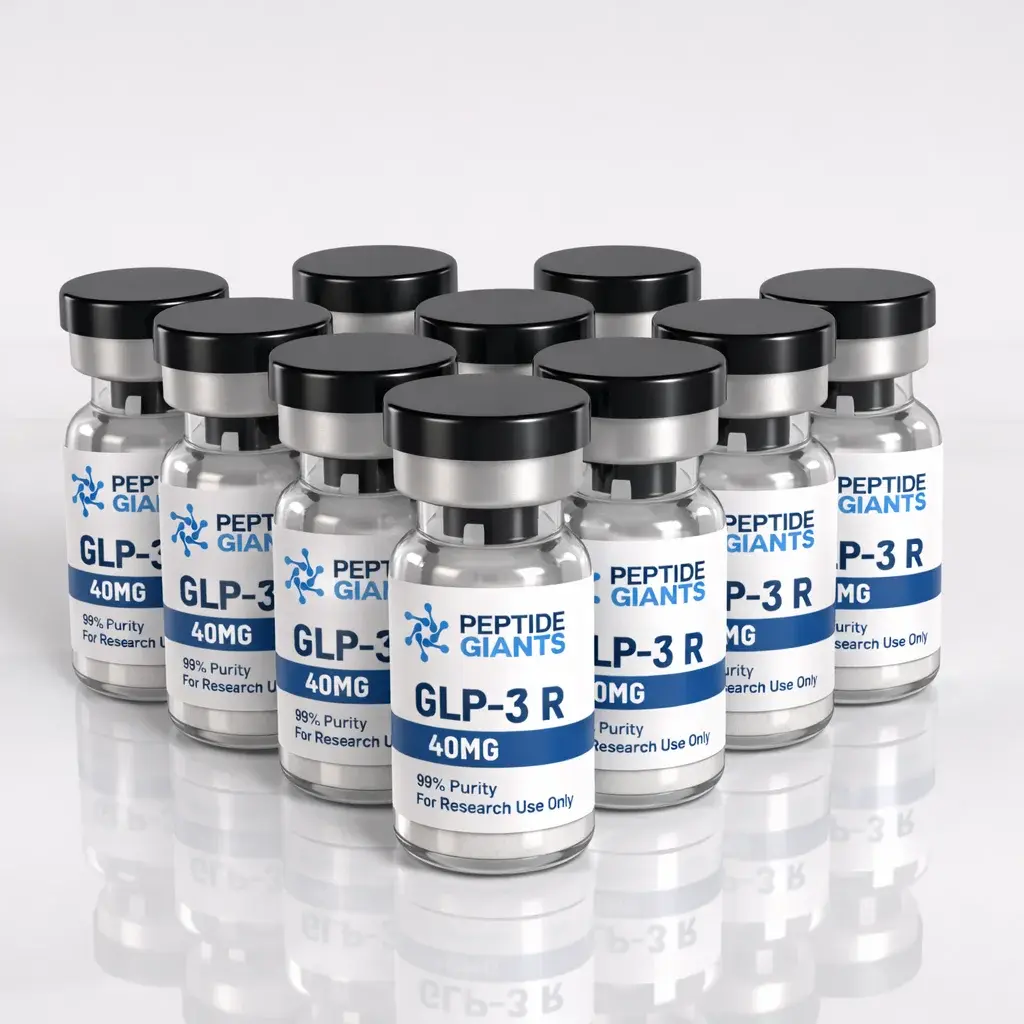
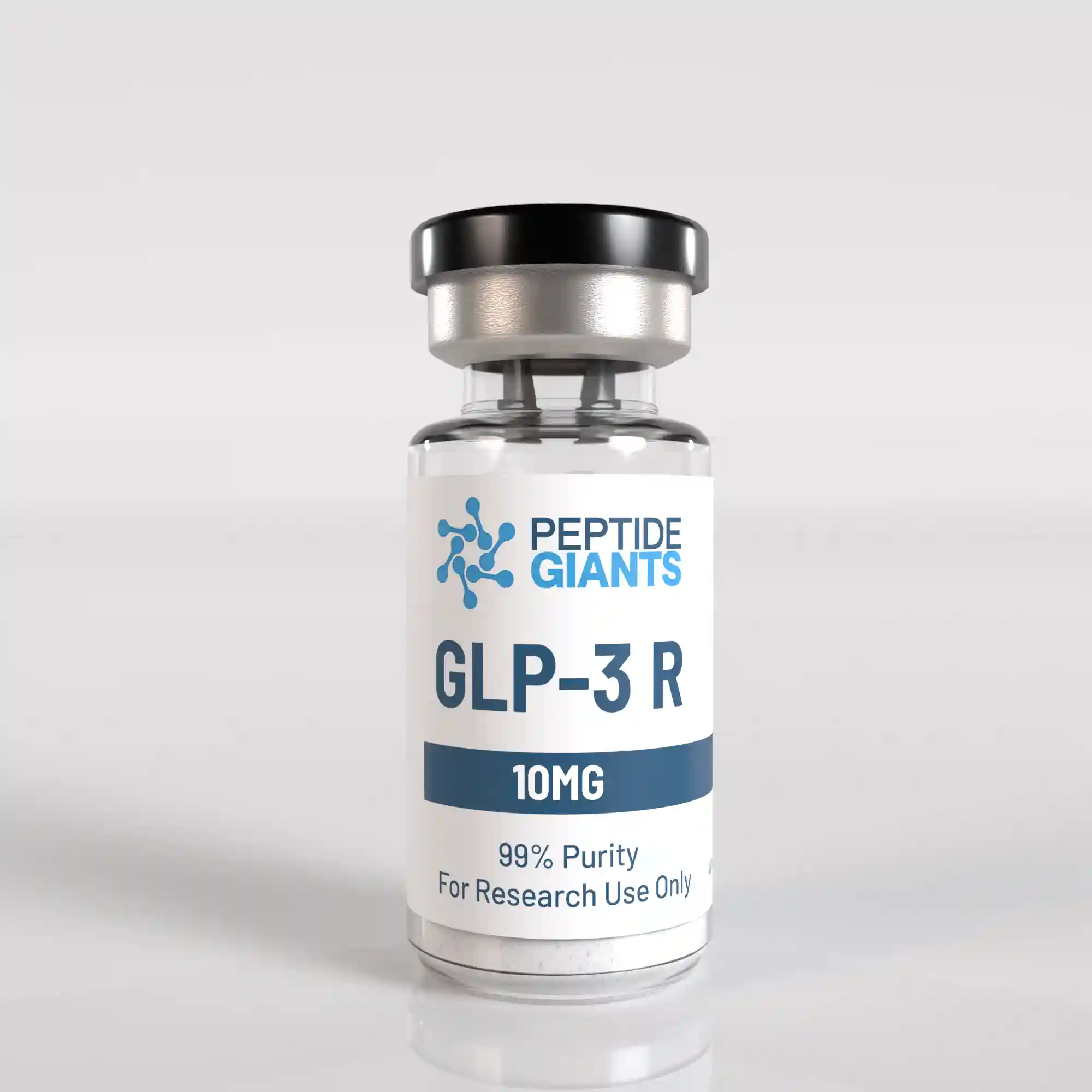
GLP-3R (Retatrutide)
GLP-3R (Retatrutide) is a synthetic peptide compound supplied exclusively for laboratory and analytical research purposes. It is referenced in scientific literature related to peptide structure analysis, receptor interaction studies, and molecular signaling research.
This product is intended for use in controlled research environments where investigators require standardized peptide materials for experimental evaluation, analytical reference, or method development. GLP-3R (Retatrutide) is not marketed for therapeutic, diagnostic, or consumptive applications.
Intended Research Context
-
Laboratory-based investigation of peptide structure and molecular interactions
-
Analytical reference material for research and development workflows
-
Controlled experimental studies involving receptor signaling models
-
Non-clinical research applications requiring defined peptide compounds
GLP-3R (Retatrutide) is distributed in accordance with industry standards for research materials and is intended solely for professional laboratory use.
Disclaimer
-
Not intended for human or veterinary use
-
Not a drug, dietary supplement, or food product
-
Not approved for diagnosis, treatment, prevention, or consumption
This product is sold strictly as a research material. No medical, therapeutic, performance, or physiological claims are made or implied. All purchases are limited to qualified research use in laboratory settings.
-
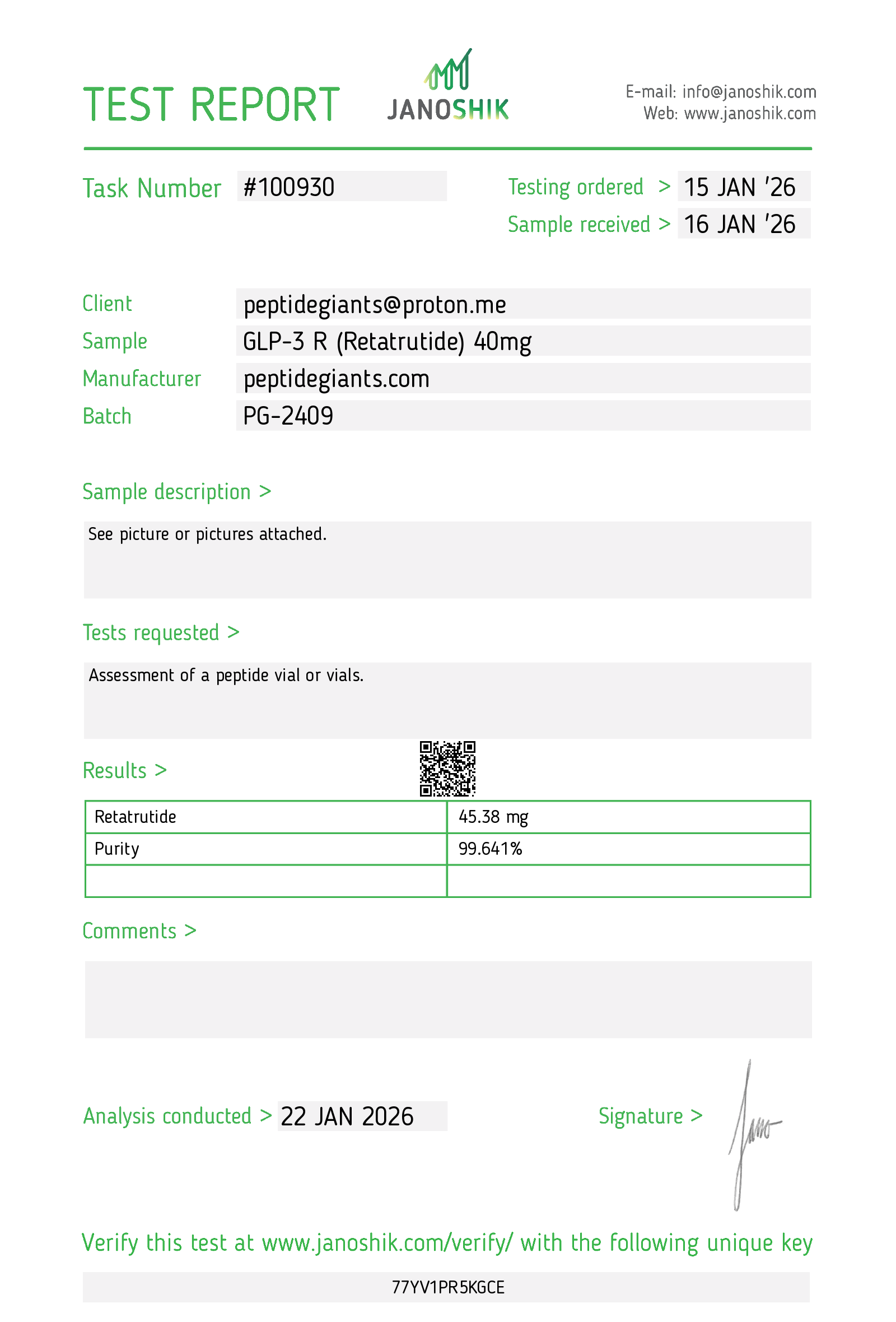
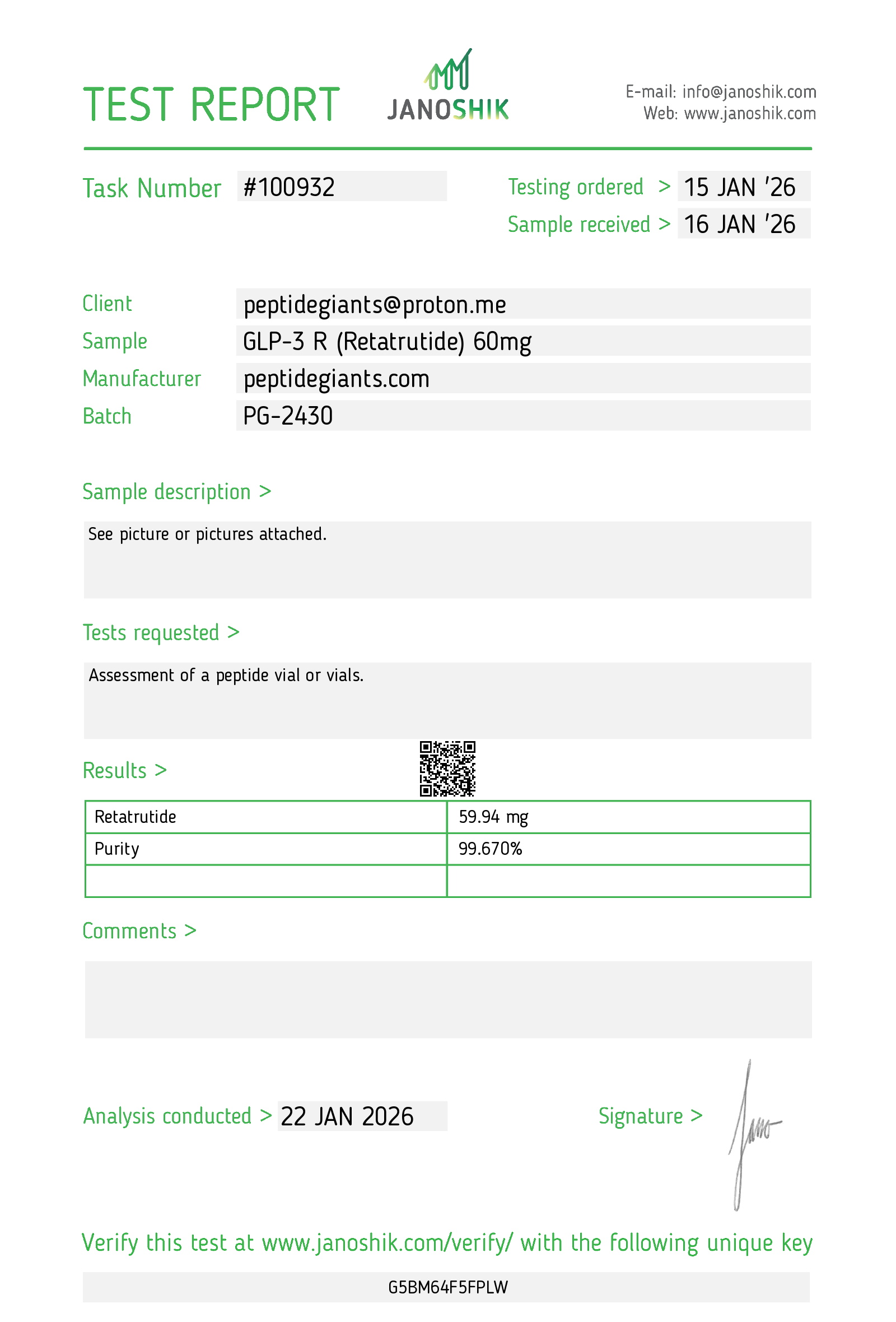
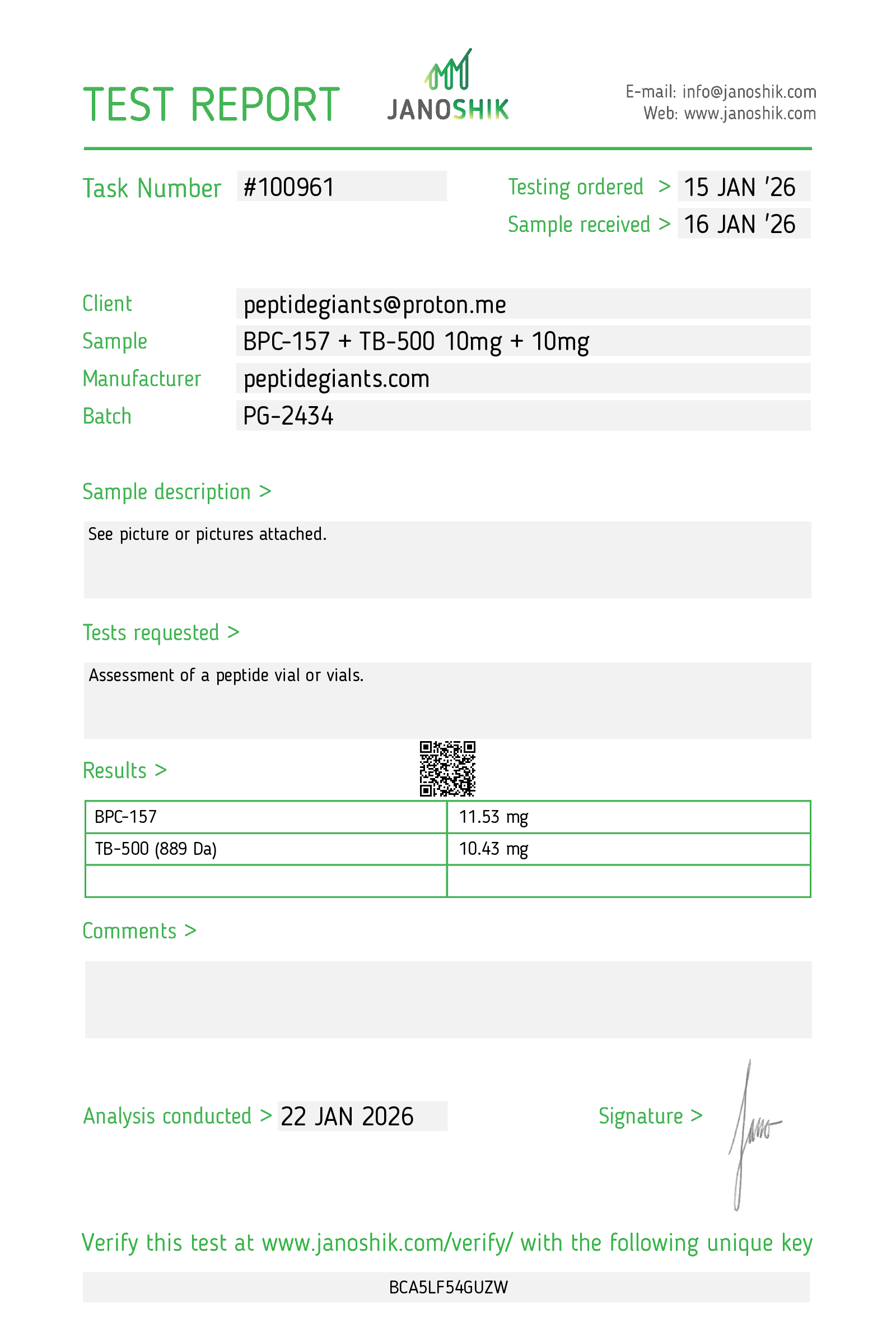
Previous Certificates of Analysis
Peptide Storage Instructions
Proper storage is essential for maintaining peptide stability and preventing degradation, oxidation, or contamination. Peptides should be kept in cold, dry, and light-protected conditions as soon as they are received. For short-term storage (days to weeks), refrigeration at 4°C (39°F) is generally sufficient. Lyophilized peptides are typically stable at room temperature for several weeks, allowing for near-term experimental use. For long-term storage (months to years), peptides should be placed in a deep freezer at –80°C (–112°F) to ensure maximum preservation. Avoid repeated freeze-thaw cycles, and do not use frost-free freezers, as temperature fluctuations can accelerate degradation.
Peptides are sensitive to oxidation and moisture. When removing a peptide from frozen storage, allow the vial to reach room temperature before opening to prevent condensation on the peptide or inside the container. Limit exposure to air as much as possible. After removing the required amount, containers should be resealed promptly and, when available, sealed under a dry, inert gas such as nitrogen or argon. Peptides containing cysteine (C), methionine (M), or tryptophan (W) are especially prone to oxidative changes. To reduce degradation risks, it is recommended to aliquot peptides into single-use portions to avoid repeated freeze-thaw cycles.
Peptide solutions are less stable than lyophilized peptides and are more vulnerable to microbial and chemical breakdown. Sequences containing Cys, Met, Trp, Asp, Gln, or N-terminal Glu are particularly unstable in solution. If peptides must be stored in solution, use sterile buffers at pH 5–6 and divide the solution into aliquots immediately. Peptide solutions stored at 4°C (39°F) are generally stable for up to 30 days, but unstable sequences should remain frozen when not in use. Long-term storage in solution is not recommended.
Lyophilized (Freeze-Dried)
Short-Term Storage—Lyophilized peptides are extremely stable compared to liquid forms. Proper storage protects their structure and purity.
Short-Term Storage (30–60 days): Store at room temperature (cool, dry place, away from heat).
Avoid humidity and exposure to air.
Medium-Term Storage (1–2 years):
Store under 4°C (39°F) (refrigerator).
Long-Term Storage (2–4 years): Store at -20°C (-4°F) or preferably -80°C (-112°F) for maximum stability.
Reconstituted (Mixed)
Short-Term Storage—Peptide solutions usually remain stable up to 30 days when stored at 4°C (39°F), depending on the length of the peptide sequence and its inherent stability.
Long-Term Storage—If peptides absolutely must be stored in solution for long-term use, sterile buffers with an ideal pH of 5–9 should be used.
Store small aliquots at –20°C or colder (avoid frost-free freezers), and minimize freeze-thaw cycles to preserve the peptide’s stability.
Containers for peptide storage should be clean, chemically resistant, and appropriately sized. High-quality glass vials provide excellent chemical stability and clarity. Plastic vials may also be used; polystyrene offers clarity but limited chemical resistance, while polypropylene provides stronger chemical resistance with a translucent appearance. Peptides may be transferred between vial types as needed, as long as sterility and integrity are maintained. Peptide Storage Instructions page.docx To maintain peptide integrity, always store peptides in a cold, dry, and dark environment; avoid repeated freeze-thawing; minimize contact with air and moisture; protect them from light; avoid long-term storage in solution; and aliquot according to experimental needs.